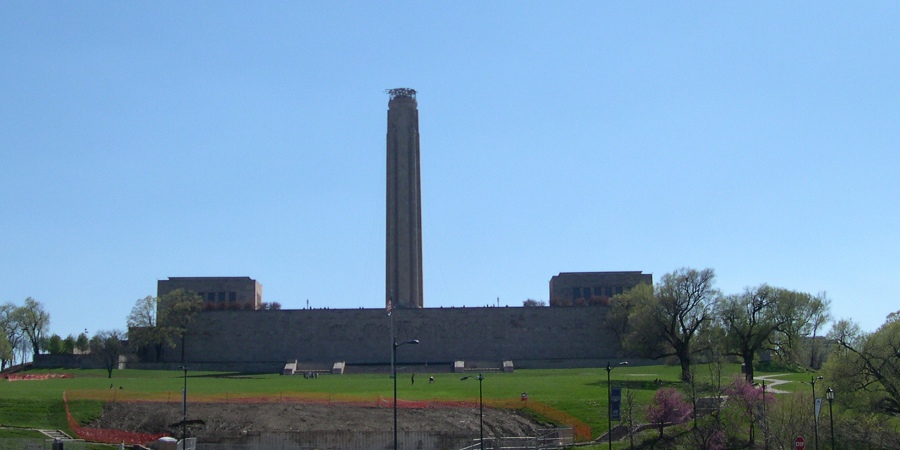
Kansas City: The Liberty Memorial & National World War I Museum
· March 2012 ·
|
For other Kansas City pictures, go here 
What makes a great war memorial?
Old: make it big, visible, somewhat mysterious.
| 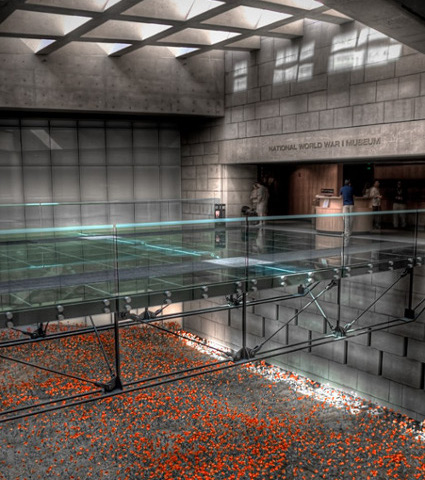 |
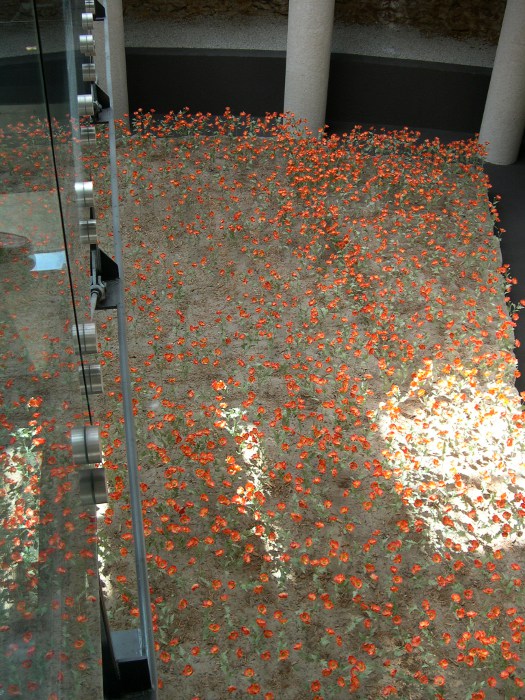
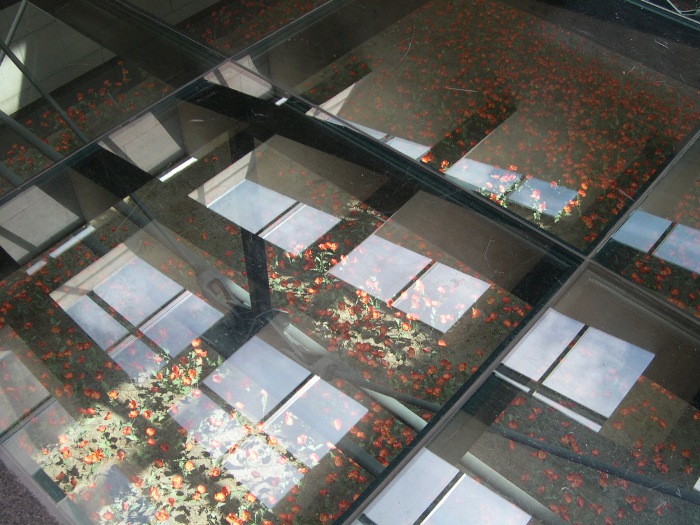
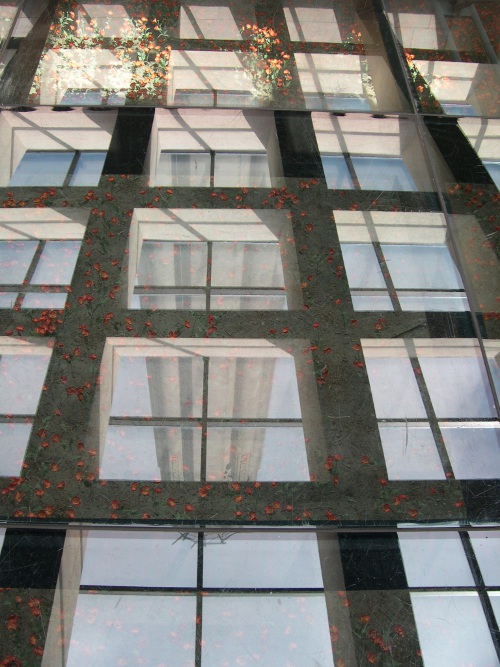
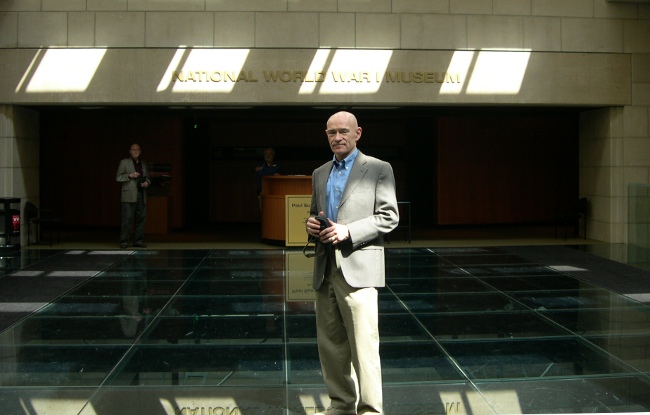
New: first rule seems to be don't forget the old. Entering the museum you walk over a glass bridge above 9,000 red poppies, each one representing 1,000 dead from World War I. Looking over a side of the glass bridge to the poppies and then seeing the flowers beneath the bridge. This is a conventional gesture and sentimentalizes loss of life, not what the loss of life protected or gained--typical modern thinking on war, i.e., it was all for naught. The Germans, who invaded their neighbors not once in the first half of the 20th century but twice. Had the Belgians, French, English, Americans, and others resisted, would the French still be French, or the English English? Why weren't the wars that repelled the invaders worth the fight? You won't find that question answered in the museum in Kansas City, but there are several in the older war memorial under which the museum was built (see this link).
|
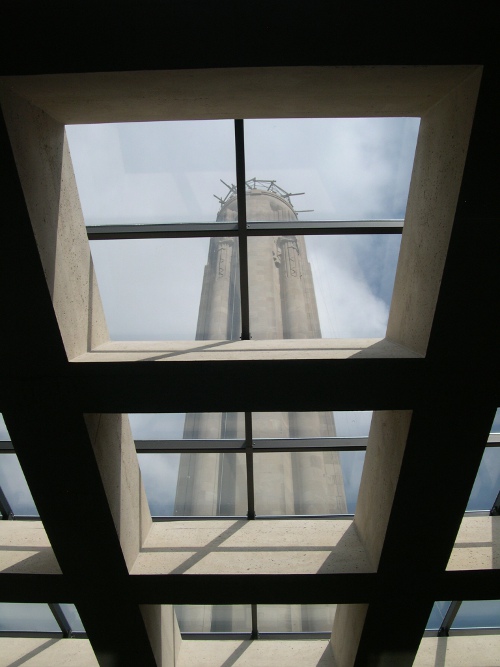
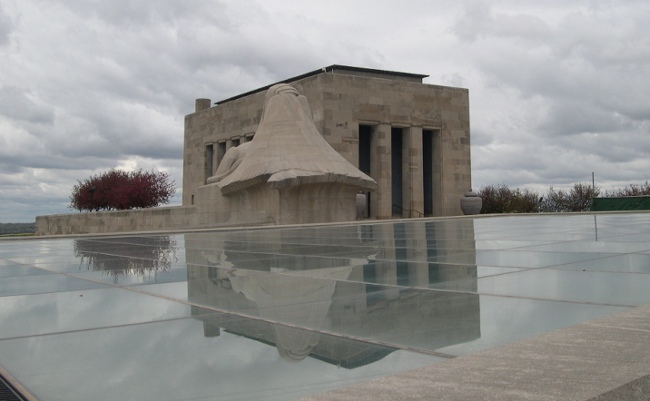
You step across the flowers and also across the reflection of the memorial tower from 1921. |
There are some good displays on dates and numbers, a good mix of personal memorabilia and official records.
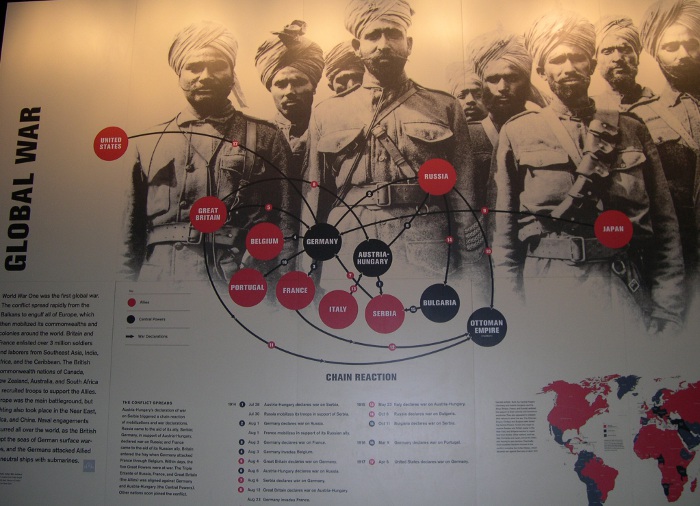 Nations in the conflict
States in the US and how many men served 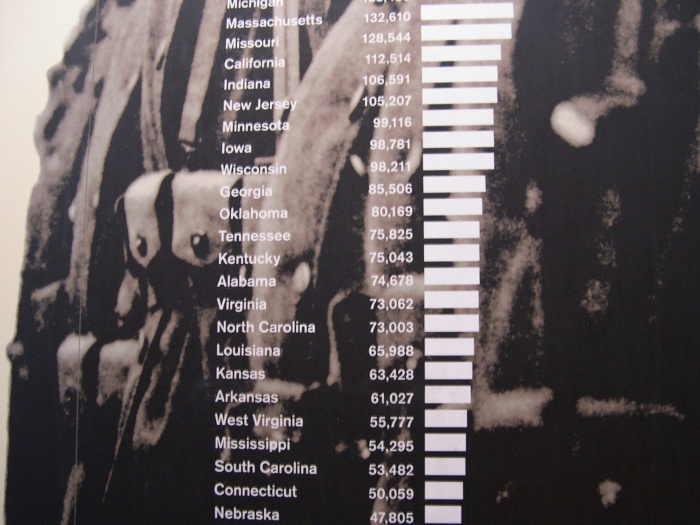
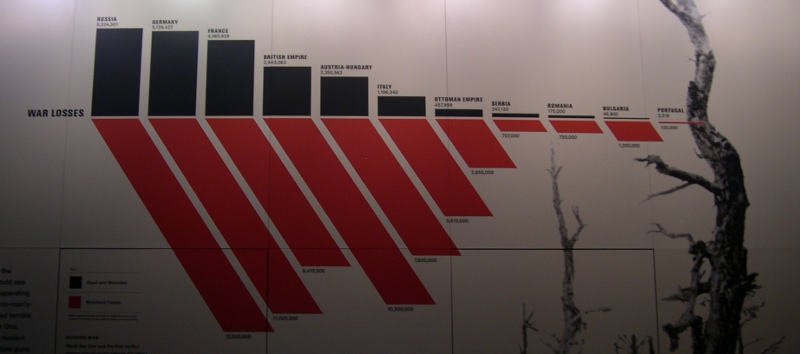
The most sobering graph, showing how many served and how many died.
These numbers are always confusing. The top (red) bar shows dead and wounded, ranging from 5 million in Russia to 4 million + in Germany and France, 2.5 million in the British Empire, and so on. However, a total of 9 million men, about 1 in 8 of those who served, died in the war, about 1 million from the British Empire. Far greater numbers were injured. US figures are too small to appear here: about 180,000 men died, 120,000 of them from disease rather than combat. All phases of the war, including field ambulances, are included.
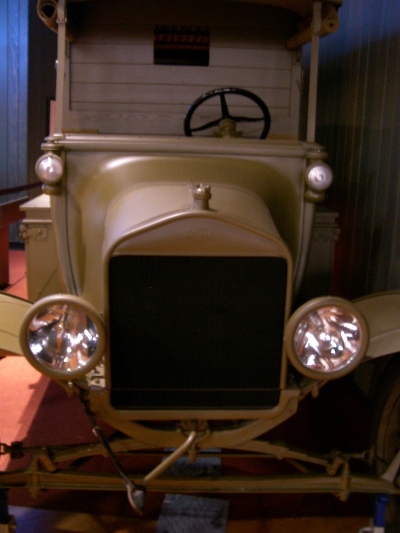
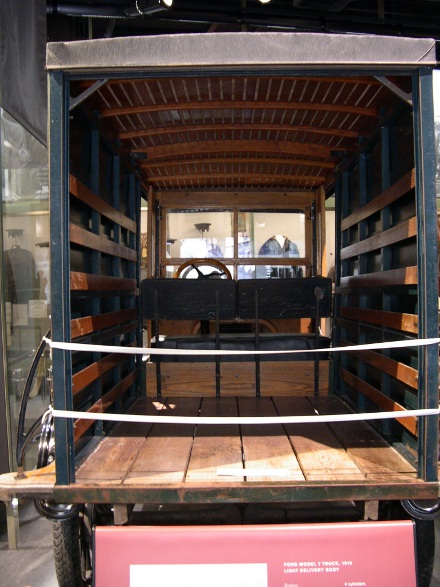
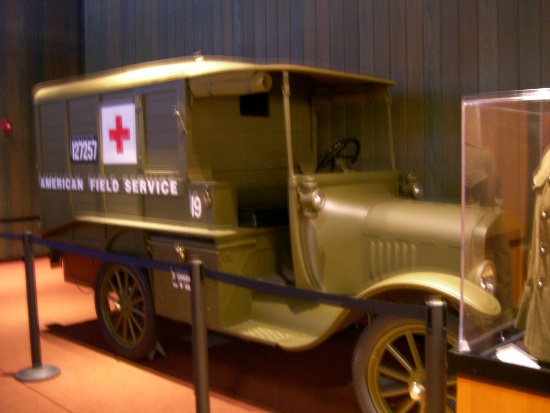
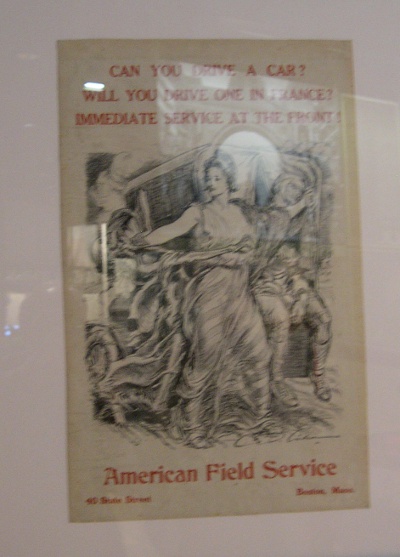
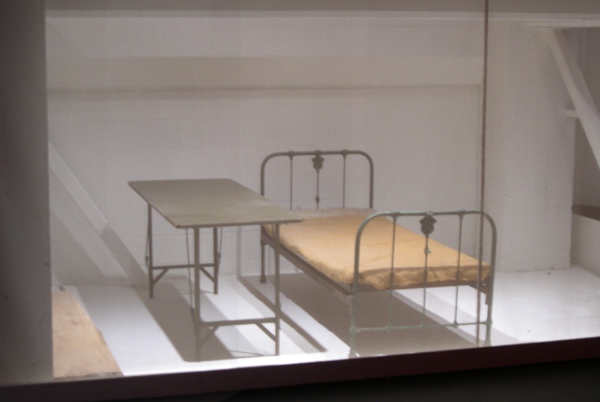
"Can you drive a car? Will you drive one in France? Immediate service at the Front!" No kidding!
But
Edith Wharton, who supported ambulance units and hospitals, would have been pleased.
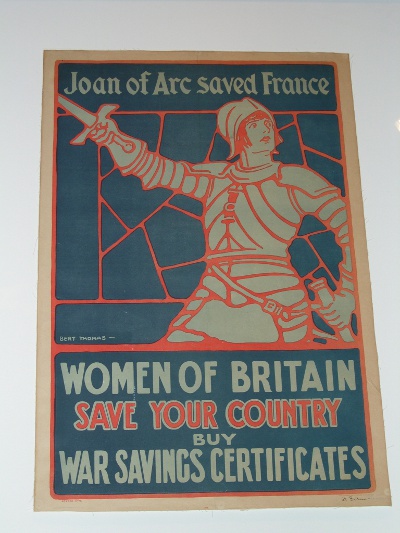
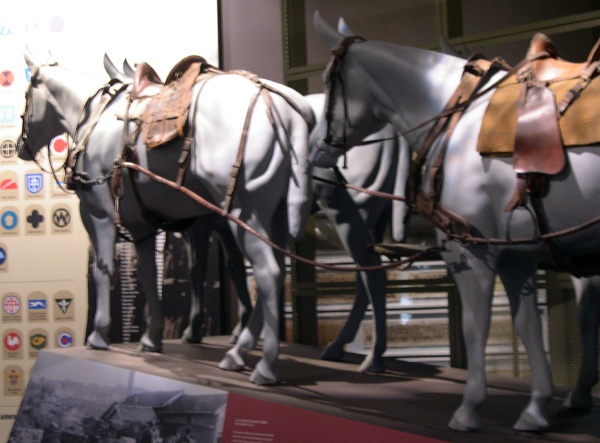
And older modes of transport are not forgotten, those on foot least of all.
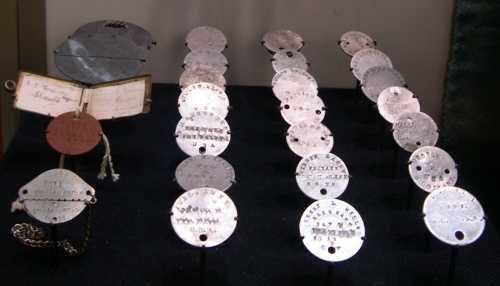
Dogtags and insignia
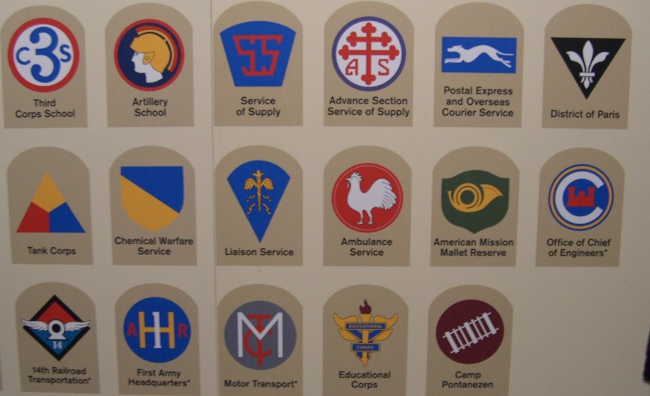
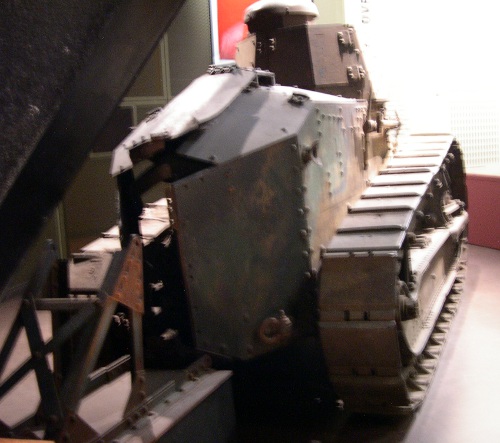
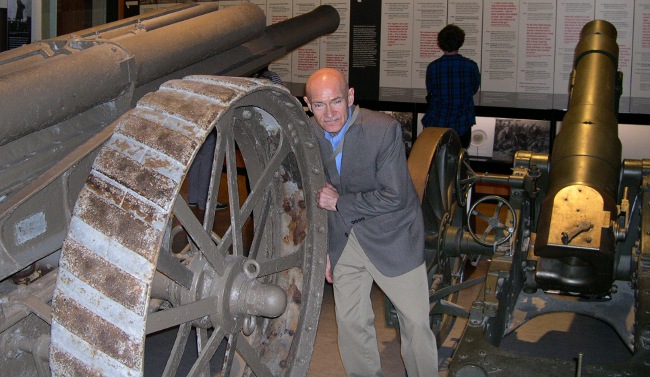
You can get up close and personal with weapons.
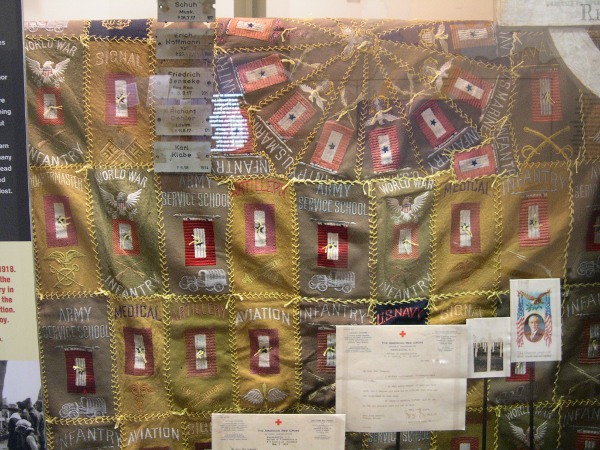
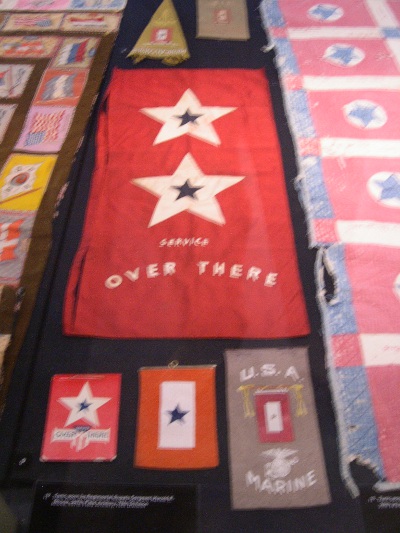
And quilts were used to remember the war efforts of civilians as well as combatants.

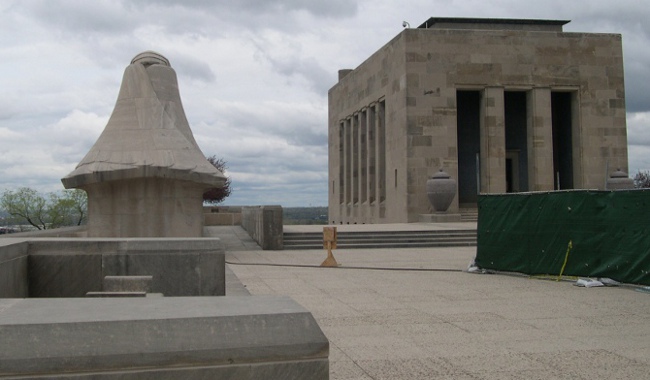
It feels good to get out into the space above the museum. But the memorial is odd: two immense sphinxes opposite each other, very grand, their wings over their heads to indicate that the future cannot be known. Maybe just one of them could have made that point well enough? Some say they hide their heads in mourning, but that's open to question.
|
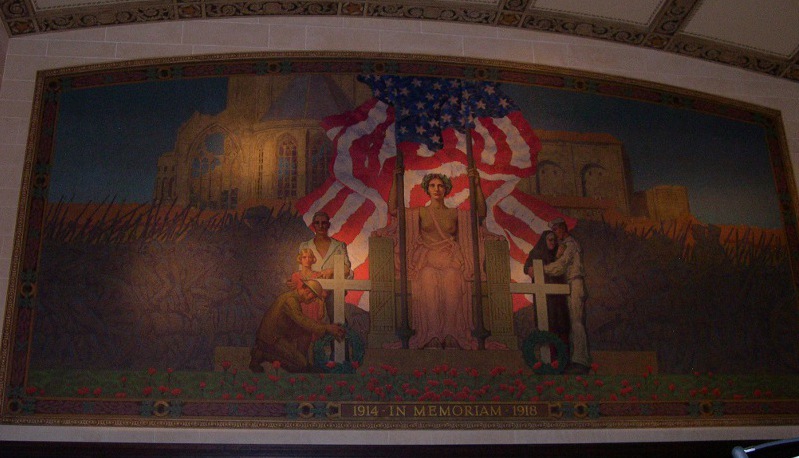
There are two war memorials, each a large hall, on either side of the tower. One of them was open during our visit. The paintings are impressive, a rich period mix of allegory and realism. Some of the posters are striking, too. The pictures below come from the building called Memory Hall. Information about the images below was taken from the National Historic Landmark Nomination for the entire complex, which was given National Historic Landmark status in 2006. The buildings behind the sphinxes are both war memorials. See below. |
|
The tower affords a wonderful view of KC
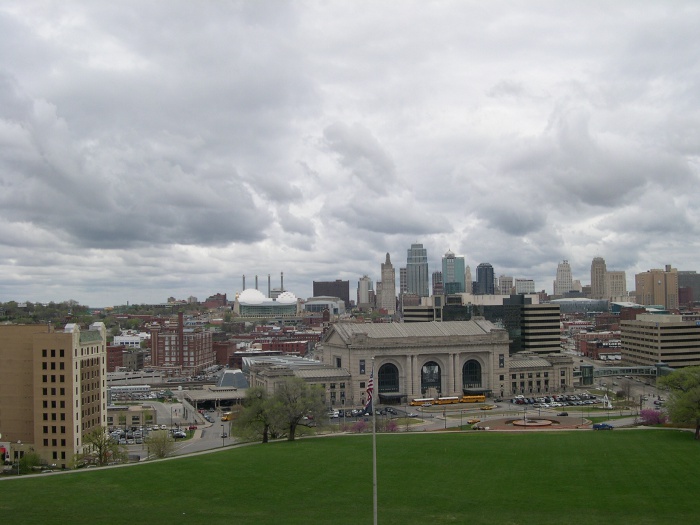
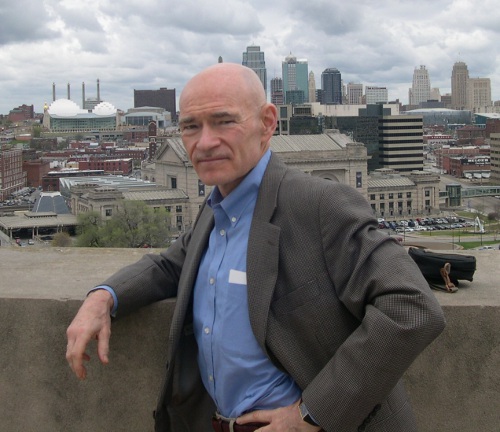
The white domes on the left belong to the Kaufmann Performing Arts Center. Union Station is in the center.
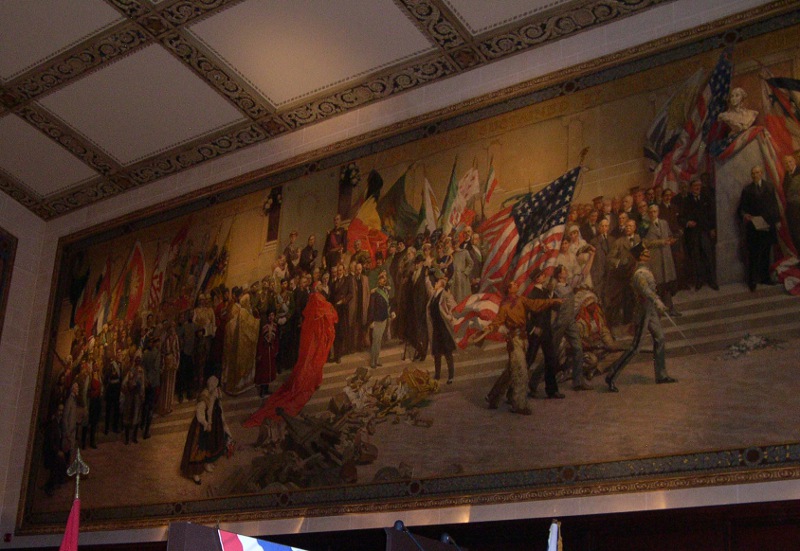
The artwork is from 1950 and later, so its spirit is not that of the 1920s. The paintings are, unfortunately, difficult to decipher, and hang at heights that make reading some of the texts difficult. But you don't have to look too closely to see that the images mix patriotic and religous themes, that women are especially prominent in all the images, that combatants are seen in both heroic and abject poses (not only the latter), and that there is no attempt to apologize for the blood and grief that national defense requires.
The images are also unusually detailed in representing policy makers in both civilian and military dress and so bridging the usual gap between the level at which decisions are made and the level at which they are carried out. The spirit seems to be that of the 1950s, that is, post World War II, as much as that of World War I. All the same, rousing. Texts in quotations below come from the 2006 application for National Historic Landmark status (which was granted that year; cited below as NHLS and page).
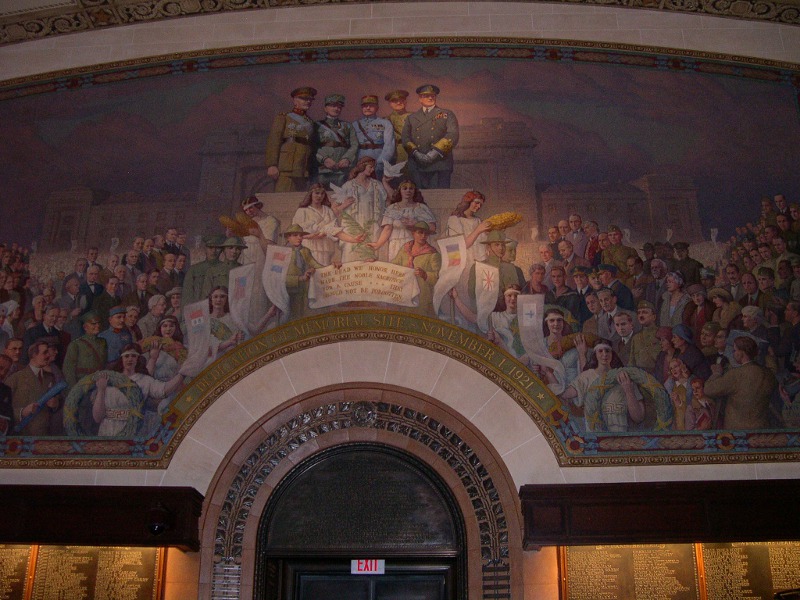
Above:
"Covering the west wall of Memory Hall above the entrance is the mural Dedication of the Memorial Site November 1, 1921, measuring 33’ in width x 16’ in height, depicting portraits of the five Allied leaders and more than 100 Kansas Citians who were present at the original dedication for Liberty Memorial. The huge canvas, the work of Kansas City artist Daniel MacMorris, was dedicated on May 30, 1950" (p. 7).
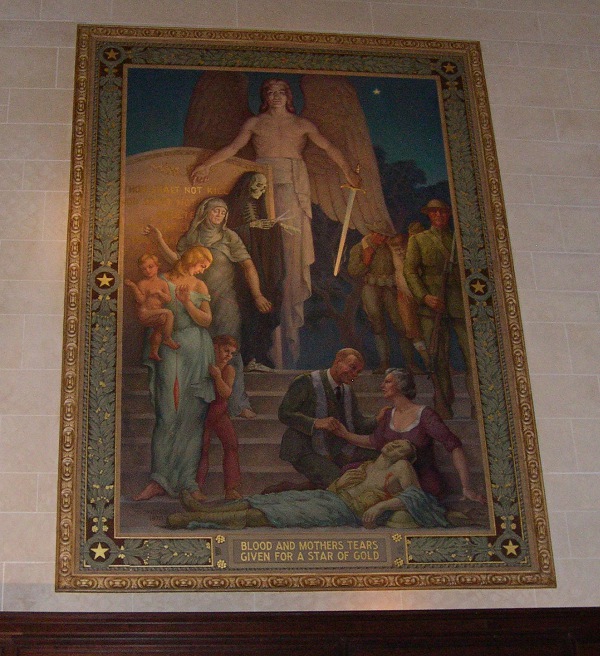 |
These three paintings are by Daniel MacMorris,
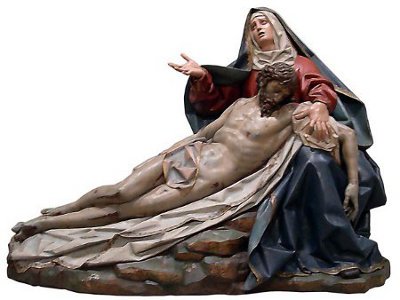
not a great artist, but he knew what he was doing. Just as the figure in the blue dress on the left evokes portraits of Mary with Jesus and John the Baptist at her side, the pastor (wearing a stole) consoling the mother whose wounded son lies in her lap evokes the Pietà, such as this one by Gregorio Fernández (Valladolid, Spain).
|
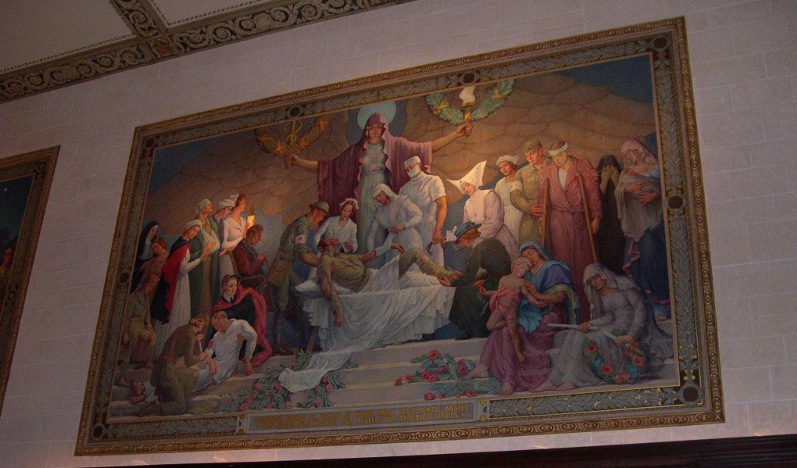
[Seat us beside the?] women of World War I, God's gentle angels,
who bound our wounds and healed our troubled spirits.
A Kansas City artist, MacMorris was responsible for "Blood of Mother’s Tears Given for a Star of Gold, located on the east end of the south wall and measuring 16’x 9’ (1970); Women of WWI, a mural placed centrally on the south wall and measuring 16’ x 21’ (1955); Hope like a Blue Star Kept Mothers Faith Alive at the west end of the south wall (1970)" (NHLS, p. 7).
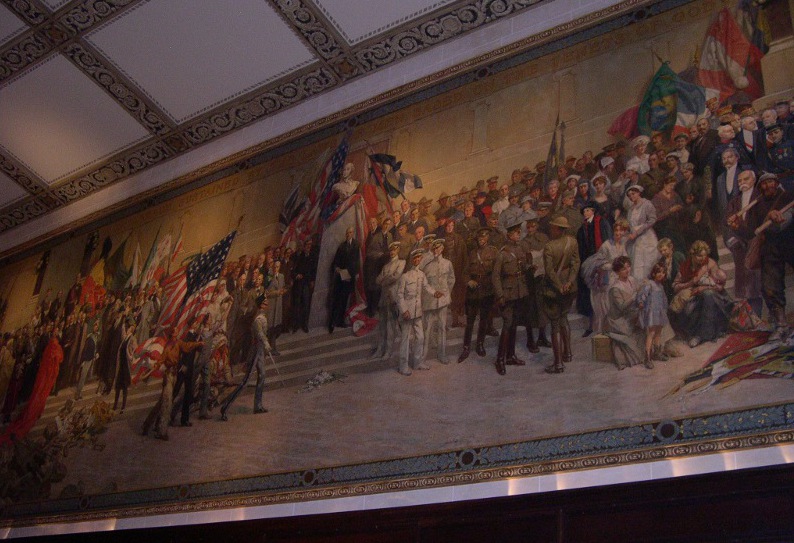
Seen above and below: "Pantheon de la Guerre, a 1914-1918 mural reworked by the artist and hung on the north wall in 1959" (NHLS, p. 7).
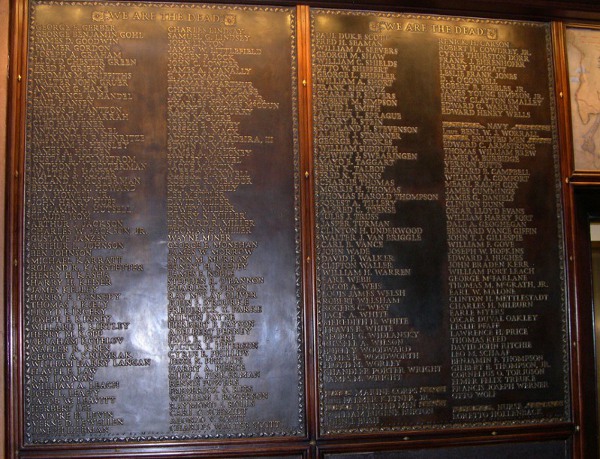
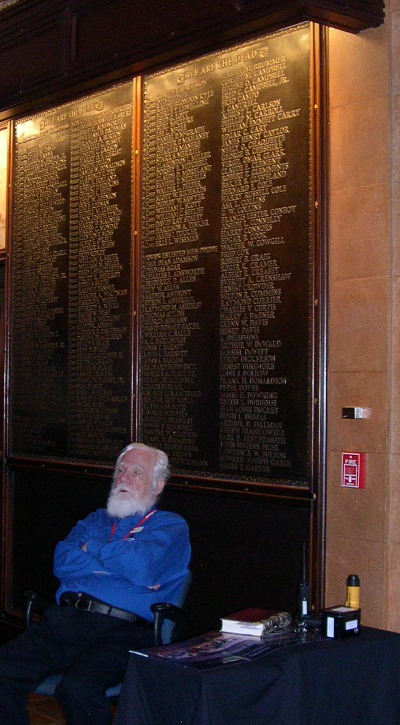
The 440 names of men and women from Kansas City who died in the war. The memorial and many areas of the museum are staffed with volunteer vets who add a friendly seriousness to both places.
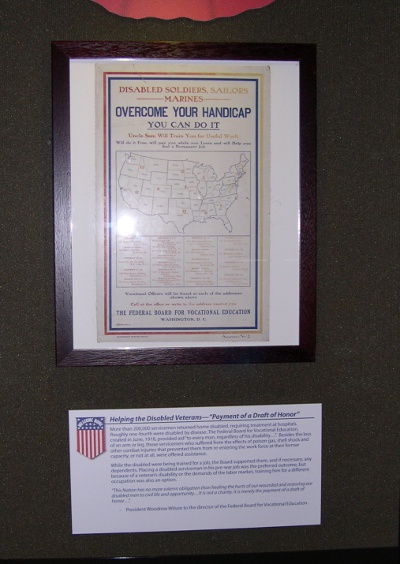
Overcome your handicap